
Everything you need to know about FMD


Foot-and-Mouth Disease (FMD) has become a major animal health crisis in South Africa. In the last year, the outbreak of this disease has spread across multiple provinces throughout the country. These outbreaks have caused many farmers to stress about their wildlife, livestock, and what the future might look like for their farming operations.
These crises have led to many debates, viewpoints, and opinions about what can be done to stop FMD. Along with the outbreak of this deadly disease came an outbreak of panic, frustration, and hopelessness for farmers all around South Africa. Unfortunately, misinformation travels faster than any virus.
To address this crisis, WRSA has given a lot of time and resources to create meaningful solutions for our members. One such solution is our strategic partnership with Buffalo Analytics. This system is available for all our members and uses groundbreaking software to transform testing and movement of Buffalo, wildlife, and livestock.
What is FMD, and how does it spread
FMD is classified as an animal control disease, this is according to the Animal Diseases Act, 1984 (Act No. 35 of 1984) and regulations. FMD is a highly contagious virus that affects animals with split hooves, such as cattle, sheep, goats, pigs, and some wildlife. This is caused by Aphthovirus, a group of viruses that causes FMD. The spreading of this disease occurs through direct animal contact, contaminated feed, water, and farm equipment.
There are seven different types of serotypes of FMD. The serotypes that affect South Africa currently are SAT 1, SAT 2, and SAT 3. If an animal is immune to one of these variants, it can still be affected by the others. This alone makes it difficult to control this disease and keep it from affecting other farms and livestock. Human movements between farms can also cause FMD to spread. Both livestock and wildlife are suffering from this virus. FMD does not infect humans, but it does paralyze trade and farming operations. The impact of FMD on communities, businesses, and farms is severe.
The symptoms of FMD
The symptoms of FMD include the following. Fever, reduced appetite, blisters on the mouth, tongue, teats, and between hooves. This can also include lesions on the feet and around the hooves and drooling. These lesions can also lead to livestock not eating properly, a reduction in production, secondary infections, and weight loss. FMD can be severely fatal in young animals.
Prevention of FMD
There is unfortunately no permanent cure for FMD, making prevention protocols and biosecurity the most logical option. Given the lack of treatment for FMD, prevention is always the first option. Biosecurity is always one of the main options for the prevention of FMD. Effective biosecurity includes managing incoming animals properly and controlling movements for animals, people, and vehicles. This also includes constantly cleaning equipment to avoid pathogen levels. Also, disinfecting footwear is also another way to prevent FMD from spreading.
WRSA has developed practical access control boards designed to help ranchers effectively manage and monitor who enters their property, when they enter, and for what purpose. These boards strengthen on-farm biosecurity by creating a clear record of all people and vehicle movements, supporting disease prevention and responsible property management.
You can order a biosecurity board through the WRSA office, + 27 82 441 1822. The reason for these boards is to record access control on your property.

How does the permit work?
The Movement Control Protocol currently applies to FMD Disease Management areas in KwaZulu-Natal and Limpopo, as formally declared in May 2022 under the Animal Disease Act, 1984 (Act No 35 of 1984), comprising areas. WRSA is monitoring the situation across provinces and will notify members of any new amended protocols.
Buffalo Analytics developed an electronic movement permit application that is inline with state veterinary requirements in the Limpopo province. These movement applications can be used for all species, including wildlife and livestock.
MOVEMENT PERMIT APPLICATION: https://forms.gle/JLjSEPHmpYKoVZar7
Key points for cattle breeders and wildlife ranchers
Animals must have official identification as required by the Animal Identification Act. Permit applications must be sent to the relevant provincial office at least 3 working days before the move. For movements requiring a risk assessment, applications must be submitted 28 days in advance. Animals must complete a minimum 21-day quarantine before a permit can be issued.
All these movements will be considered based on the information of each case, which comes from the risk assessment. The details and information of the risk assessment will be determined by the circumstances and purpose of the intended movement of every different live animal. The risk assessment and whether the movement will be allowed will be communicated to each farmer once their application has been received and reviewed. The application must include the origin and destination of the animals. This also includes the species types, number, age, and vaccination status. In times of crisis and hardship, trust and coordination are critical. Farmers, veterinarians, authorities, and every other South African must work together during this time. Ensuring practical systems are in place that allow responsible operations and containment of this disease.
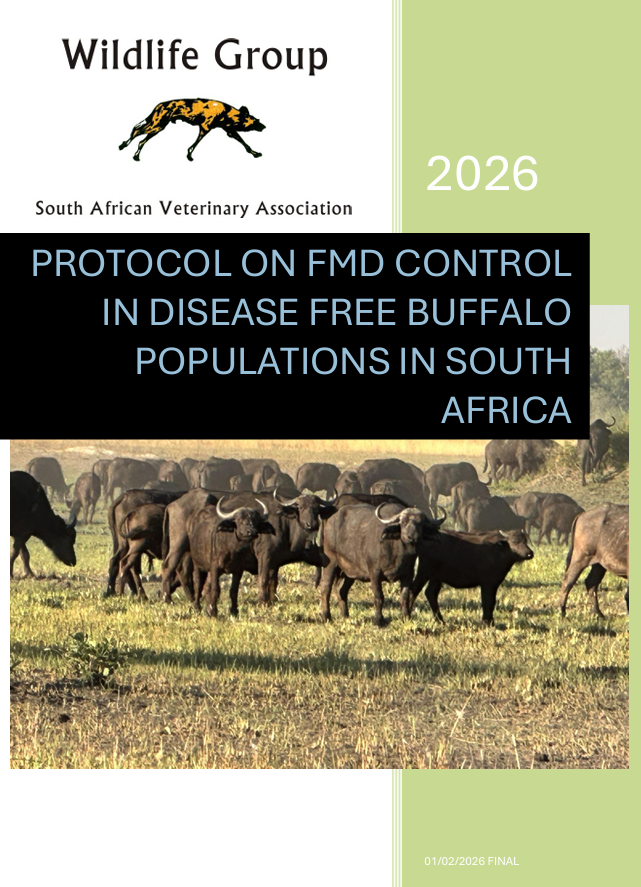
WRSA strongly encourages all buffalo farmers to attend the FMD Buffalo Protocol Workshop hosted in collaboration with the SAVA Wildlife Group on 14 February 2026 from 08:00 to 17:00. The workshop will take place at the Faculty of Veterinary Science, Onderstepoort, with an online attendance option available. This important session will address current FMD protocols, compliance requirements, and practical disease management at the wildlife–livestock interface. We urge all buffalo owners and managers to participate as the draft protocol of FMD control in disease-free buffalo populations in South Africa.
Please RSVP using the following link: https://www.addevent.com/event/wklgg8scvg0f
As the hunting and game capture seasons approach, careful planning, compliance, and communication need to take priority. Transparent and up-to-date information needs to be shared to help people be informed to make the right decisions. WRSA is available for any help or updates by phone or email members@wrsa.co.za or +27 82 441 1822.


Comments